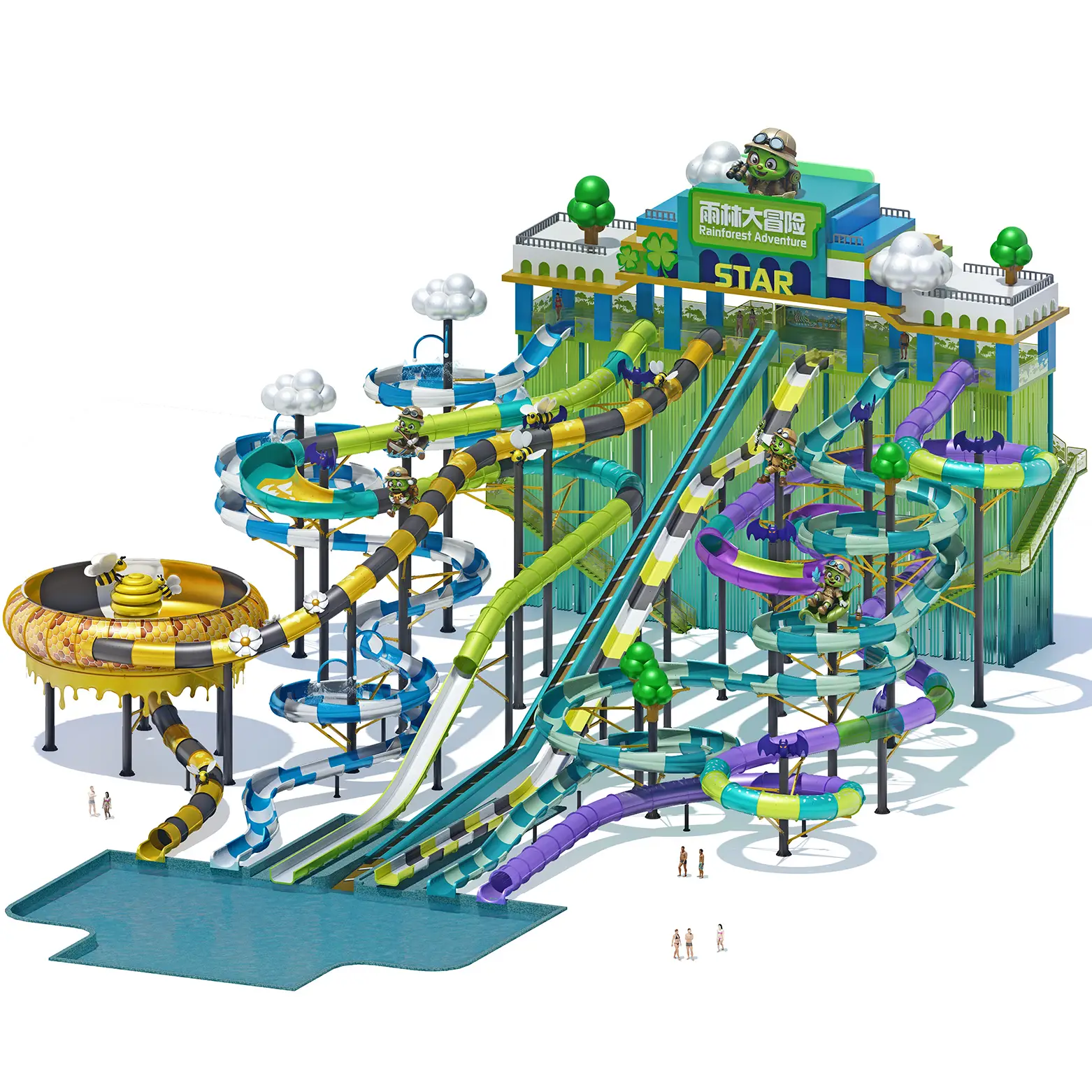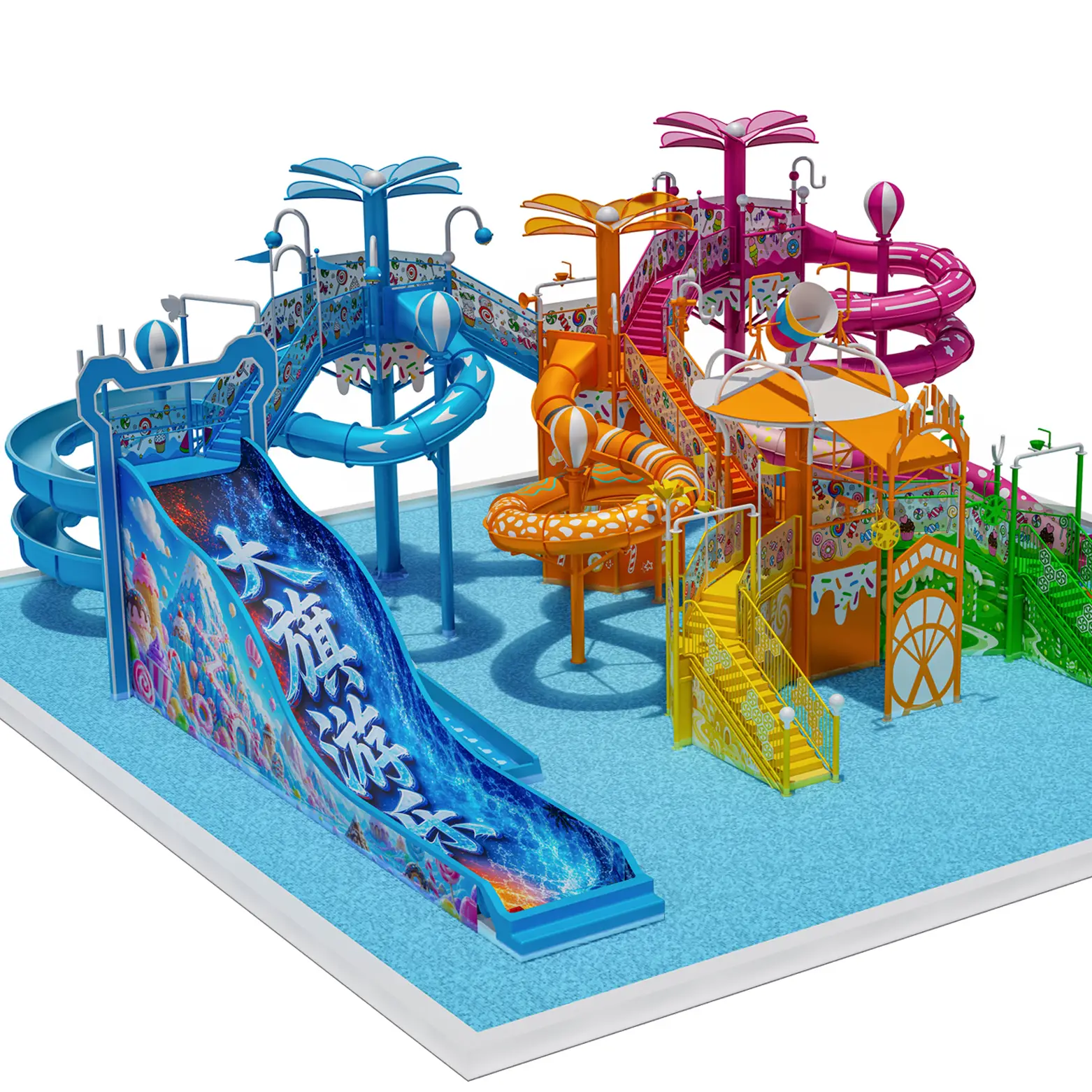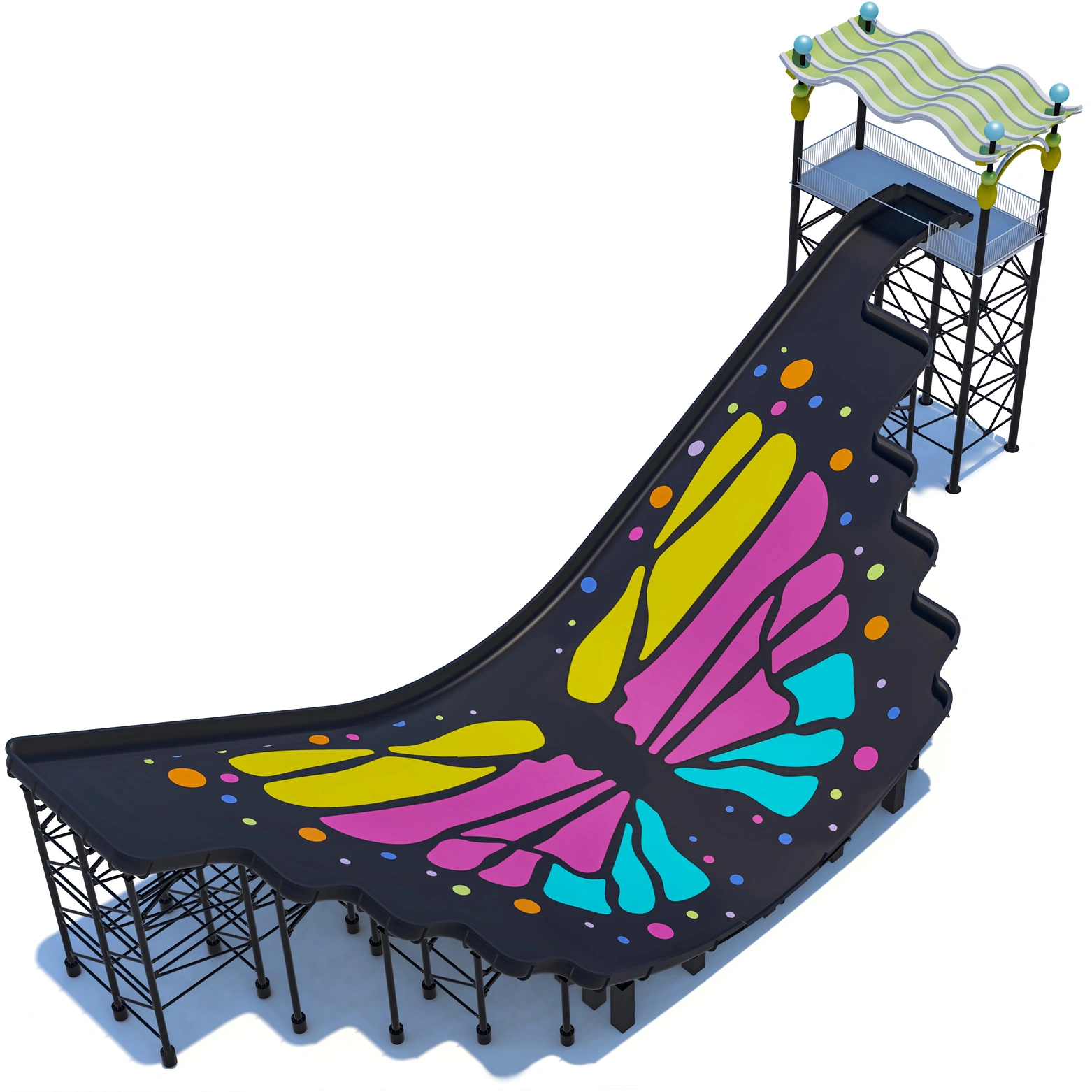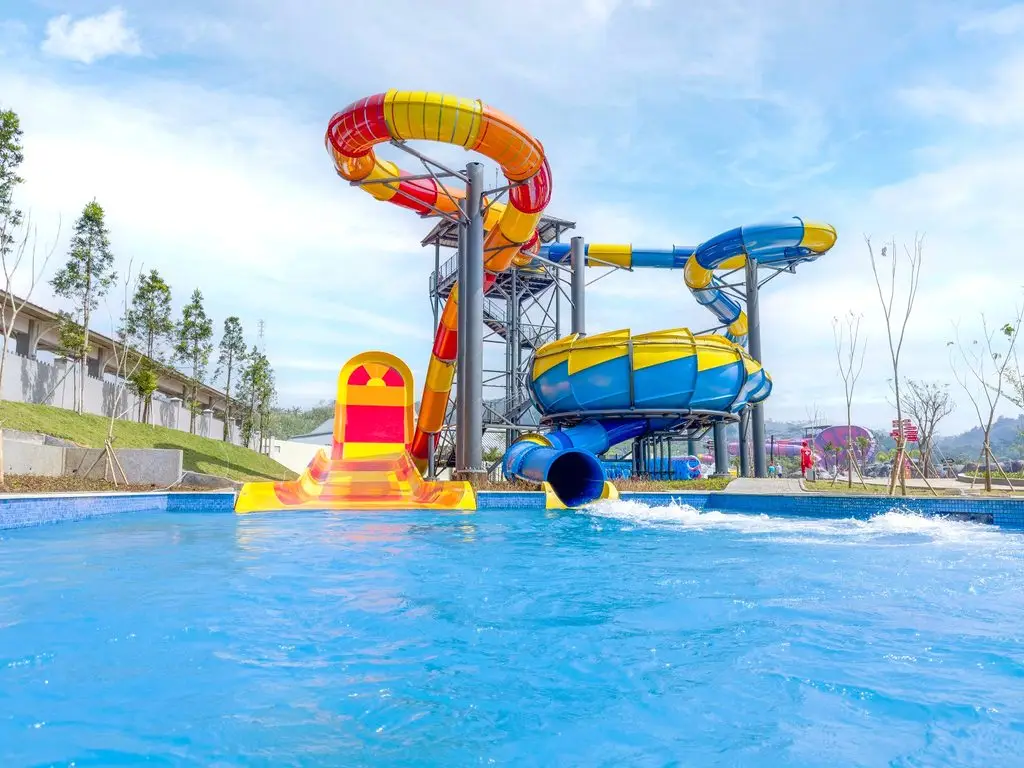
After just 2 or 3 operating seasons, multi-million-dollar fiberglass water slides often lose their gloss, turn yellow, or become abrasive enough to scratch guest rafts and skin. When this happens, park engineering teams often resort to aggressive pressure washing or harsh industrial acids—only to strip the gelcoat entirely and trigger rapid chalking. Having delivered turnkey water park solutions for years, DAQI has seen countless expensive slide flumes destroyed by improper care. FRP water slide maintenance isn’t just routine janitorial work; it requires precise material science.
1. The Reality of Water Slide Scale & Gelcoat-Safe Acidic Descaling
The stubborn white crusting on slide walls is a hard compound formed when calcium and magnesium deposits combine with pool chemicals and sunblock oils under intense UV exposure.
Reaching for hydrochloric acid, nitric acid, or caustic cleaners destroys the slide flume’s protective gelcoat resin. Use this field-tested, gelcoat-safe organic acid formula instead:
1.1 Safe Formula & Application Technique
- Descaling Agent: Citric Acid or Sulfamic Acid (3% – 5% concentration by weight) to target carbonate scale.
- Surfactant: Non-ionic surfactant AEO-9 (0.5% concentration) to break oil barriers and speed up penetration.
- Safe pH Target: Keep the mixed solution strictly within pH 3.5 – 4.5.
- Application Technique: Apply by brush or low-pressure sprayer, let it dwell for 5 – 10 minutes (never let it dry on the surface), and rinse immediately with clean water.
1.2 Descaling Cleaner Comparison
| Cleaner Type | Descaling Power | Gelcoat Damage Risk | B2B Recommendation |
| Hydrochloric Acid (HCl > 10%) | Extremely Fast | Severe (Yellowing, Micro-cracking) | ❌ Strictly Prohibited |
| Heavy Alkaline Cleaners | Poor (Ineffective on scale) | Moderate (Dulling, Resin Degradation) | ❌ Strictly Prohibited |
| DAQI Organic Acid Blend | High (Safe Dissolution) | Zero Damage (pH 3.5–4.5) | ✅ Highly Recommended |
2. Pressure Washer Settings: Overpressure Destroys Joint Seals
High-pressure rinsing after descaling is essential, but blasting the surface without calibrated settings destroys gelcoat layers and joint seals.
2.1 Standard Operating Parameters
- Operating Pressure: Keep daily pressure between 80 – 100 Bar. Never exceed 120 Bar (1740 PSI).
- Nozzle Type: Use 25° or 40° fan-spray nozzles only. 0° needle nozzles are strictly forbidden as pinpoint pressure cuts into gelcoat.
- Distance & Angle: Maintain a distance of 25 – 30 cm at a 45° angle. Never spray at a 90° right angle directly into flange joint sealants.
3. Scratch Repairs & Waxing Protocols That Last
Once descaling and polishing are complete, a protective wax barrier must be restored. Categorize scratches before applying wax:
3.1 Scratch Repair Categorization
- Hairline Micro-Scratches (< 0.05 mm): No resin filling needed. Wet-sand with 2000-grit sandpaper and polish with fine-grade water slide polishing compound.
- Medium Scratches (Gelcoat intact): Use a rotary polisher with a wool pad and medium compound, then follow with a high-gloss finishing glaze.
- Deep Scratches (Fiberglass exposed): Isolate the flume, clear away loose material, fill with color-matched gelcoat resin + hardener, sand flush, and polish.
3.2 Waxing Schedule & Material Selection
- Waxing Schedule: 1 full-body wax application before spring opening; local touch-ups every 15 – 30 days during peak summer operation on high-friction drop sections and curves; and 1 protective coating before winter shutdown.
- Material Selection: Always use marine-grade UV fluorocarbon wax or pure Carnauba wax—automotive wax washes off in days and clogs sand filters.
4. 3 Costly Field Errors to Stop Immediately
- Waxing under midday sunlight: High surface heat bakes the wax instantly, leaving permanent white haze and streaks on the gelcoat. Work during early morning or overcast periods.
- Using tile/toilet cleaners on scale: Alkaline agents break resin bonds, turning the gelcoat dull and powdery.
- Blasting water directly into flange seams: Water forces through damaged sealant, corroding the underlying structural steel support frames.
5. Key Maintenance FAQs from Park Engineers
Q: The slide turns dull 3 days after waxing. Can maintenance still save it?
A: Run a water drop test. If water flattens instantly without forming beads and you can see fiberglass weave lines, the gelcoat layer has worn past its 0.2mm critical threshold. Polishing won’t work anymore; contact DAQI for professional re-gelcoating or flume restoration.
Q: How much does pool water chemistry affect slide service life?
A: Substantially. Pool water below pH 7.2 slowly etches gelcoat, while pH above 7.8 with high calcium hardness triples limescale buildup rates. Keeping water pH between 7.2 – 7.6 and total alkalinity at 80 – 120 ppm cuts scale maintenance efforts in half.
6. Conclusion
FRP water slides are core revenue assets—proactive care prevents costly downtime. A standardized routine of safe descaling, controlled rinsing, targeted scratch repair, and marine-grade waxing extends slide service life by 5 to 8 years. If your slides face heavy scale buildup, faded colors, or friction issues, reach out to the DAQI team. We deliver complete one-stop water park solutions, slide health diagnostic audits, and turnkey restoration services to keep your rides smooth, safe, and looking brand new.