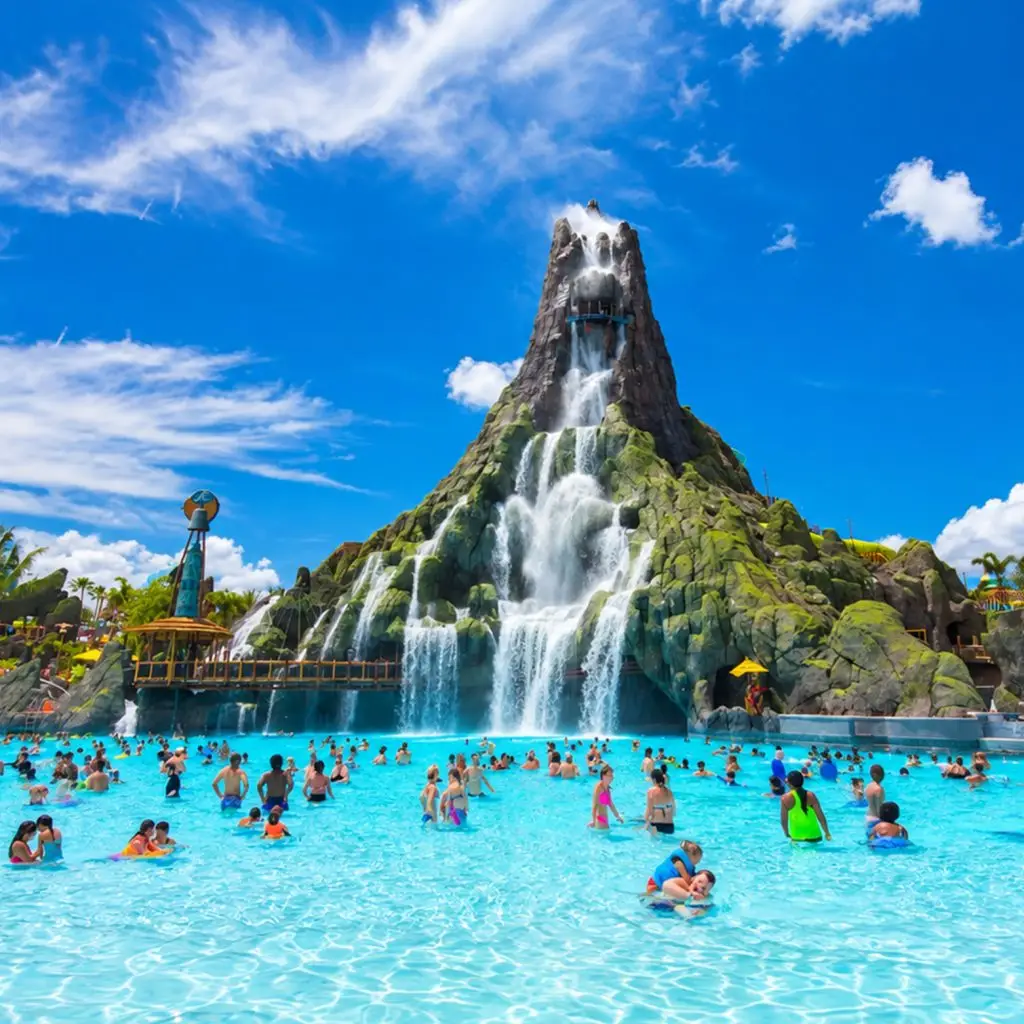
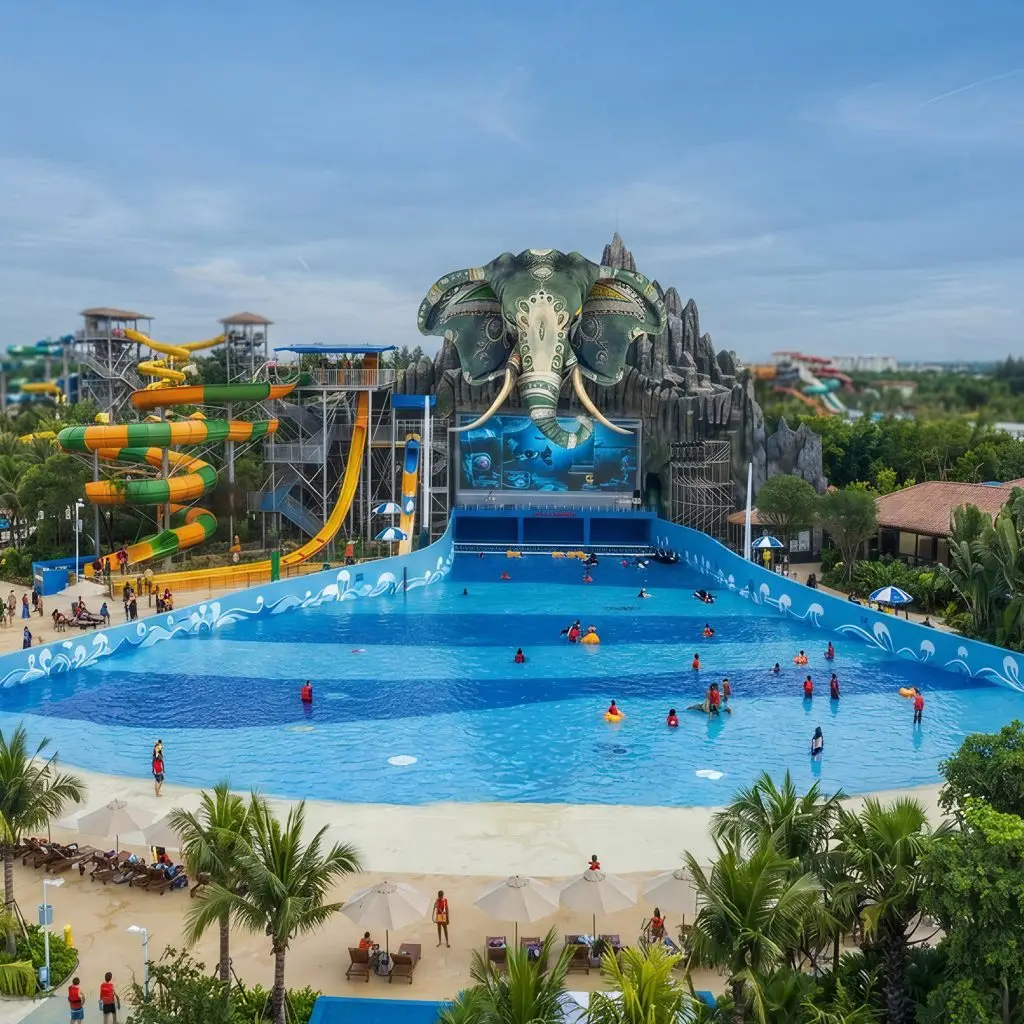
When planning a water park, many investors and project managers fall into a common trap: the bigger the wave pool, the more impressive the park, and the more visitors it will attract.
However, once the park enters its operational phase, high civil construction and equipment costs, massive energy waste during off-peak periods, and unbalanced crowd distribution (“overcrowded in the water, sparse on the shore”) often create heavy financial burdens. Is a wave pool really better when it is larger? How can developers achieve the optimal balance between ROI and guest experience through smart layout design and energy efficiency? This guide breaks down the core profitability factors for modern water park projects.
1. Industry Pitfalls: Why “Bigger Is Better” Becomes an Operational Trap
Designing massive water bodies is a common instinct during early master planning. However, oversized wave pools introduce severe long-term operational challenges:
- Wave Pool Energy Control Imbalances: Oversized water volumes force water filtration systems, disinfection loops, and high-capacity pneumatic wave equipment to run at inflated power levels. During off-peak or shoulder seasons, maintaining water quality and base power creates high, unavoidable utility bills.
- “Dead Water Zones” and Lifeguard Blind Spots: Excessively large water surfaces create a barren atmosphere when attendance is low. Furthermore, wide wave basins with deep and shallow zones stretch lifeguard coverage and slow emergency response times.
- Uneven Crowd Distribution: If the effective wave basin area is too large while surrounding lounging areas, shading structures, and F&B points are underdeveloped, guests face crowded water conditions but scorching, uncomfortable shorelines—reducing dwell time and repeat visits.
2. Key Metrics: Three Technical Indicators for Wave Pool Sizing
To move beyond arbitrary area estimates, professional wave pool design relies on precise engineering and operational metrics:
1. Water Surface Area Per Capita
Space requirements vary depending on park positioning:
- Family Resort Wave Pools: Recommended space is 2.5 – 3.5 m² per person, with shallow zones making up over 60% of the total water area to ensure safety and interaction.
- Thrill & Action Theme Parks: Recommended space in the main wave zone is 1.8 – 2.2 m² per person. Target wave heights range from 1.2 to 2.5 meters, focusing on wave power and shape stability.
2. Wave Generator Room to Basin Ratio
Equipping wave chamber dimensions, blower capacity, and air valves must match the basin depth and geometry:
- Pneumatic Wave Equipment: Ideal for shallow, fan-shaped wave pools. Chamber width and wall expansion angles dictate wave decay. Basins over 80 meters long often suffer from dissipated waves near the end, wasting civil construction costs.
- Vacuum Wave Equipment: Capable of generating 2 to 3-meter surge waves, requiring deep caisson structures and elevated chambers. If the water surface is expanded without scaling vacuum pump capacity, wave performance drops noticeably.
3. Energy Efficiency vs. Spatial Yield (kWh/m² to Revenue)
Successful wave pool planning evaluates energy consumption per square meter relative to secondary spending and average revenue per user (ARPU). Reallocating excess equipment budgets into shoreline landscaping, shade amenities, and evening event infrastructure yields a higher overall return on investment (ROI).
3. Technical Comparison: Small, Medium, and Mega Wave Pools
Choosing the right wave pool footprint early in the water park master planning stage defines the project’s financial model:
| Parameter | Small Boutique Wave Pool (Resorts / Urban Centers) | Medium Benchmark Wave Pool (Regional Theme Parks) | Mega Wave Pool (Destination Water Parks) |
| Water Area Share | 10% – 15% of total park water | 20% – 30% of total park water | 35%+ of total park water |
| Equipment Selection | Variable frequency pneumatic wave equipment | Multi-chamber pneumatic wave systems | High-capacity vacuum wave equipment + pneumatic combination |
| Energy Profile | Flexible start/stop, low standby power | Multi-mode wave patterns, zonal operation | High peak demand, dependent on VFD control |
| Recirculation Rate | 2 – 3 hours per turn | 3 – 4 hours per turn | 4 – 6 hours per turn (High chemical/power cost) |
| Target ROI Period | 1.5 – 2.5 Years | 2.5 – 4 Years | 4 – 6+ Years (Highly seasonal) |
4. Engineering Solutions: Smart Control & Spatial Optimization
For new builds and retrofits, modern wave generation technology provides effective energy-reduction strategies:
- VFD Wave System Control (Variable Frequency Drive): Integrated PLC systems adjust fan speeds and valve timings based on real-time crowd numbers and schedule phases (morning calm, afternoon peak, night events). This reduces energy consumption by 30% to 50% during low-demand hours.
- Multi-Chamber Zoning and Shoreline Redesign: By utilizing independent air chambers, operators can activate only central chambers during lower attendance periods. Incorporating landscape islands, stepped entry pools, and wraparound beach zones breaks up large water expanses, eliminating visual emptiness while maximizing F&B and rental seating space productivity.
5. Frequently Asked Questions (FAQ)
- Q1: How do you calculate the optimal wave pool size based on projected annual attendance?
- Calculation Logic: Optimal Area = (Peak Daily Attendance × Water Retention Rate × Target m² Per Capita) ÷ Daily Turnover Factor.
- Sizing should reflect the actual operating season length (e.g., 90-day seasonal vs. year-round) and local market capacity rather than copying oversized destination parks.
- Q2: How can existing water parks upgrade old, energy-intensive wave pool systems?
- Solution: Retrofitting does not require major civil reconstruction. Operators can upgrade to variable frequency drive (VFD) blower controls, install high-efficiency pneumatic valves, and reconfigure circulation nozzles to cut system energy consumption by over 20% while enhancing wave variety.
Designing a wave pool is not simply a matter of maximizing square meters. It is an engineering discipline combining fluid dynamics, equipment efficiency, space planning, and financial modeling. A well-engineered wave pool design avoids operational bottlenecks and ensures sustainable profitability.
If you are planning a new project or seeking to optimize your water park planning, wave pool energy control, or water park equipment selection, feel free to contact our engineering team. Backed by global project experience and advanced wave generation technologies, we deliver tailored, high-ROI solutions for developers worldwide.