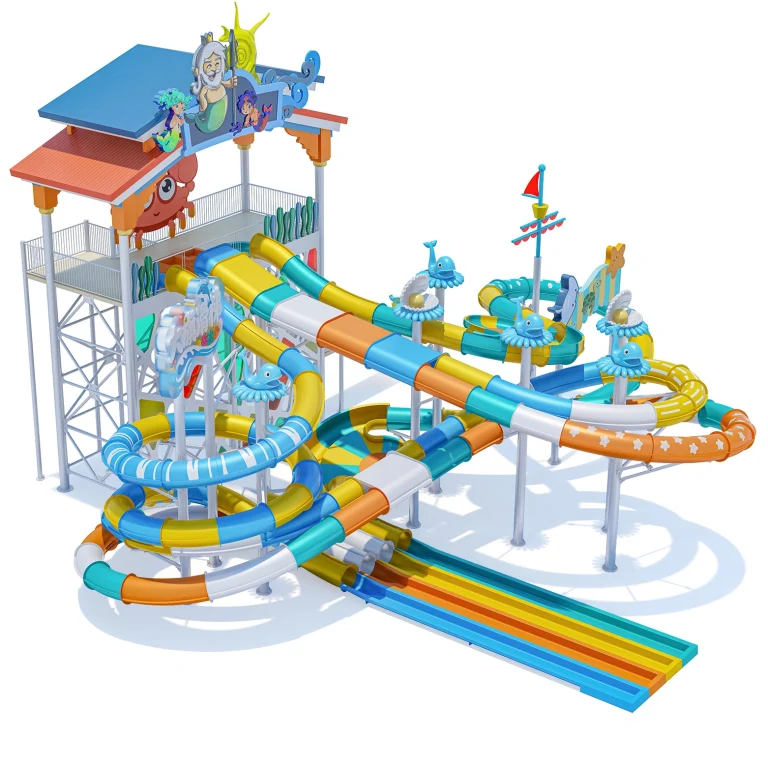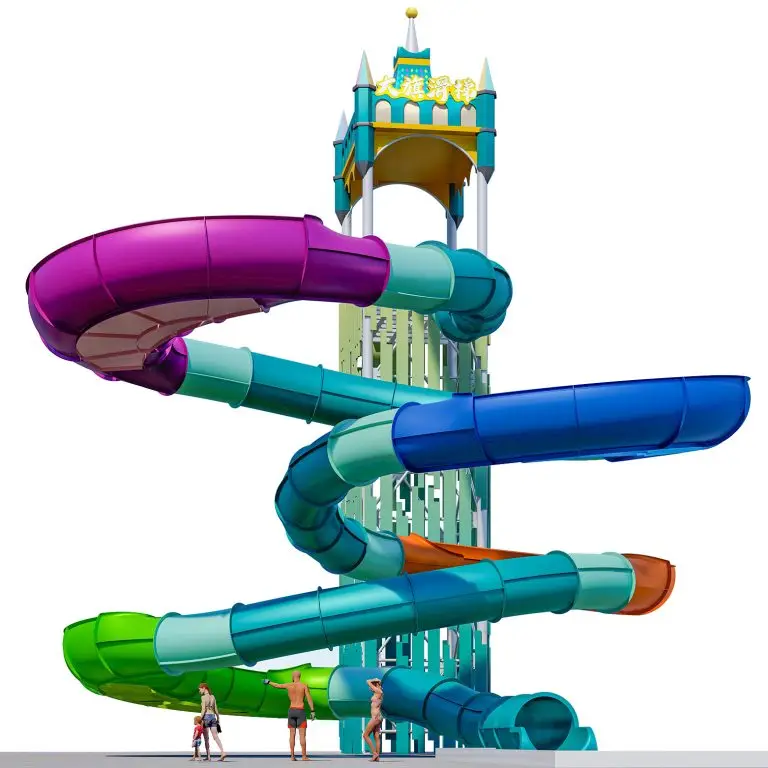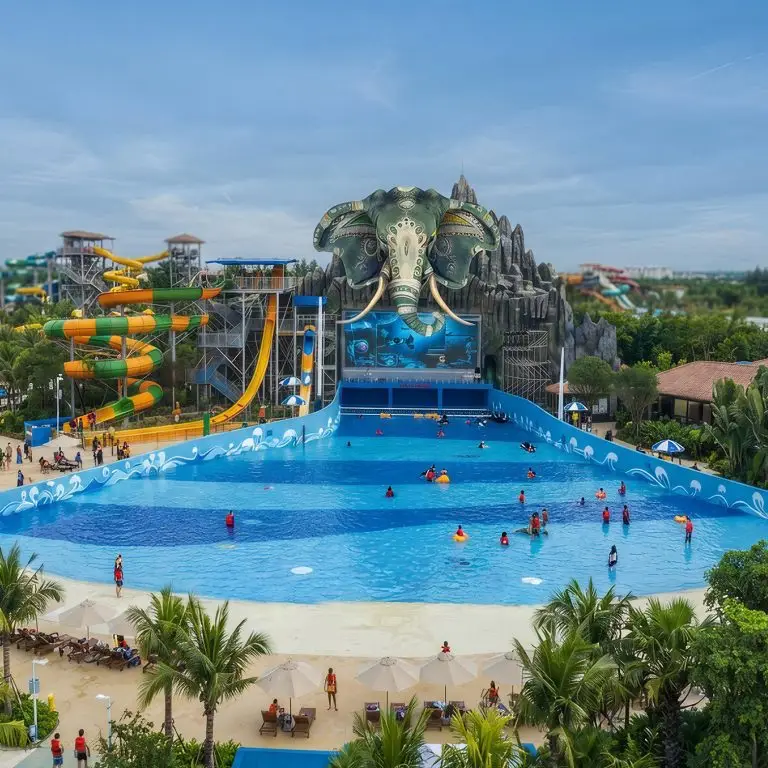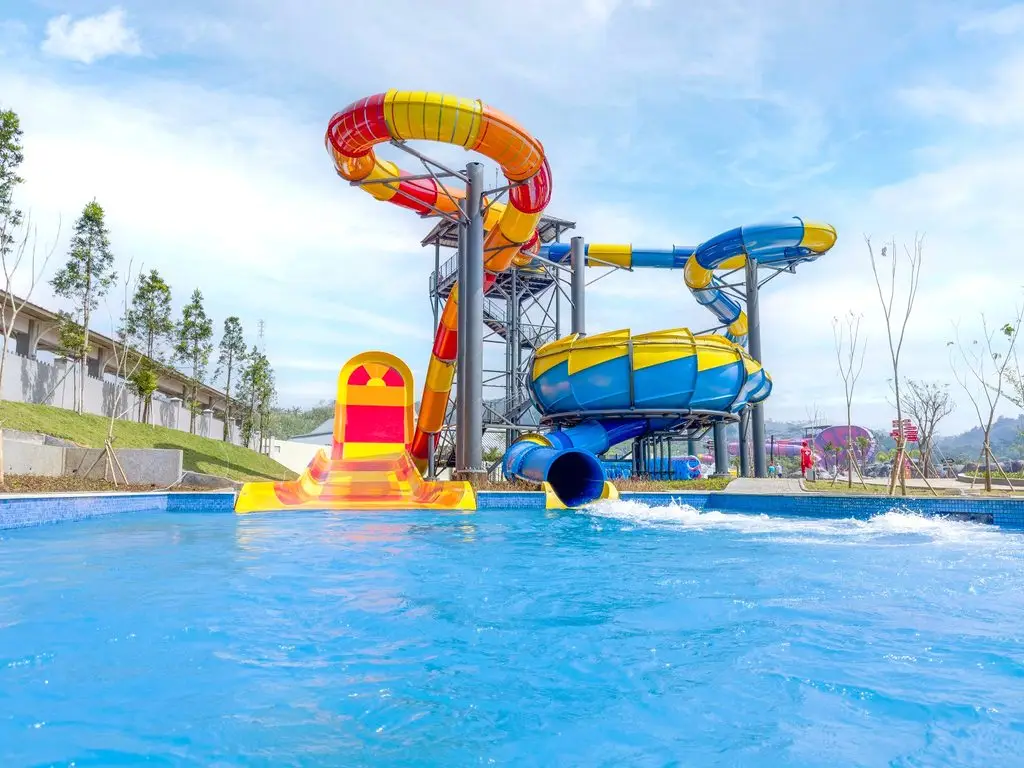
In modern water park development, traditional fully enclosed, pitch-black slides are fading fast. Translucent water slides—offering natural daylighting by day and mesmerizing LED light shows by night—have quickly become the ultimate traffic driver for theme parks worldwide looking to boost gate revenues.
However, in B2B procurement and ongoing operations, translucent fiberglass (FRP) is also a notorious area for buyer’s remorse. Many park operators encounter the same pain point: stunning in Year 1, but by Year 3, the tubes turn yellow, get brittle, and reveal ugly interior dark spots when illuminated at night.
How can you verify if a translucent water slide delivers genuine engineering-grade weather resistance rather than short-lived aesthetics? This guide skips the generic marketing talk and breaks down the core science—from resin chemistry to micro-molding and structural mechanics.
1. Daylight Transmission & Optics: Higher Transparency Isn’t Always Better
A common misconception in park design is that translucent slides should be as clear and bright as possible. In real-world engineering, this is a dangerous mistake.
- Light Transmittance vs. Glare Control: The optimal light transmittance for translucent FRP slides sits between 40% and 60%. Above 70%, harsh noon sunlight creates blinding glare for riders, compromising safety. Below 30%, you lose the immersive natural daylighting effect entirely.
- Privacy vs. Safety Monitoring: High-grade translucent slide walls achieve a “translucent-blur” effect. It diffuses the rider’s image into a soft silhouette, granting lifeguards clear visual confirmation of rider flow without violating visitor privacy.
- Eliminating “Zebra Striping”: Traditional hand lay-up methods suffer from inconsistent resin-to-glass ratios, creating visible light streaks and uneven shadows under sunlight. Buyers must verify whether a manufacturer utilizes L-RTM (Light Resin Transfer Molding), which maintains wall thickness tolerances within ±0.5mm for perfectly homogeneous light diffusion.
2. The UV Resistance Mechanism: Why Cheap Translucent Slides Yellow
Solar UV-A and UV-B radiation cause photo-oxidative degradation in standard polymers, triggering a spike in Yellowing Index (YI) and a sharp collapse in tensile strength.
An engineering-grade anti-UV translucent slide relies on a robust 3-layer protective architecture:
| Layer | Material Specification | Engineering Function |
| Outer Layer | ISO/NPG Weatherable Gel-Coat (with high HALS content) | Directly blocks UV rays to prevent surface micro-cracking and photo-oxidation |
| Core Layer | Translucent Matrix Resin with UVA Absorbers | Neutralizes penetrating UV rays, preventing polymer chain degradation and yellowing |
| Inner Layer | E-Glass Woven Roving | Enhances structural integrity while eliminating dry glass fiber glare |
Key Technical Benchmarks:
- ISO/NPG Gel-Coat Standard: The outer shield must utilize Neopentyl Glycol (ISO/NPG) gel-coat with superior hydrolysis resistance, applied at a strictly controlled thickness of 0.6mm to 0.8mm. Too thin, and UV penetrates; too thick, and thermal cycling causes micro-cracking.
- Additive Formulation: The resin core must blend Hindered Amine Light Stabilizers (HALS) and UV absorbers. Under ISO 4892-2 accelerated xenon arc testing, the material must maintain a color variance of ΔE ≤ 3.0 after 3,000 hours of continuous exposure.
3. 4 Hard-Core Buying Metrics for B2B Procurement
Skip the sales pitch and inspect these four technical parameters directly with your supplier:
Metric 1: Request Yellowing Index Test Reports & Gel-Coat Specs
Do not rely on verbal guarantees. Demand raw material certification for the gel-coat (e.g., Ashland, DSM) and the Yellowing Index Test Report (ASTM E313 standard). Ask for high-res photos and re-test data from the supplier’s translucent water slide installations operating in high-UV regions (e.g., the Middle East or Southeast Asia) for over 3 years.
Metric 2: Backlight Inspection for Fiber Wet-Out & Impurities
Request physical tube cross-sections or inspect production samples on-site using a high-lumen flashlight:
- Inferior Quality: Shows white un-wet glass fibers, trapped micro-bubbles, and dark pigment clumps. When night LED lighting is activated, every bubble acts as a distorted glare point.
- Premium Quality: Uniform clarity like jade, with zero dry fibers, zero air pockets, and completely dispersed pigmentation.
Metric 3: Dual-Sided Mirror Finish (L-RTM Technology)
Traditional translucent slides leave the exterior surface raw and rough. Dirt and mineral deposits accumulate quickly, creating micro-prisms under sunlight that cause localized thermal degradation. With DAQI’s L-RTM dual-sided closed molding, both inner and outer surfaces achieve a 0.2μm mirror-level finish. This prevents dirt adhesion, simplifies washing, and enhances overall optical clarity.
Metric 4: Heat Deflection & Thermal Shock Resistance
Translucent materials lack heavy opaque fillers, making them more sensitive to temperature swings. In extreme climates, tube temperatures can shift from 60°C under direct midday sun to 15°C at night under cold water flushing. Verify that the slide material offers a Heat Deflection Temperature (HDT ≥ 85°C) and a Barcol Hardness (≥ 45) to prevent structural deformation and micro-stress cracking under heavy operational loads.
4. Technical Comparison: Standard FRP vs. DAQI Engineering-Grade Translucent Slides
| Parameter | Standard Hand Lay-Up FRP Slide | Low-Cost Translucent Slide | DAQI Engineering Translucent Slide |
| Manufacturing Process | Open-mold Hand Lay-up | Hand Lay-up with clear resin | L-RTM Dual-Sided Closed Molding |
| Thickness & Optics | Uneven thickness (±2 ~ 3mm), patchy | Visible zebra striping & dark spots | Tolerance ≤ ±0.5mm, 40%-60% soft diffusion |
| UV Weatherability | Basic outer paint; peels over time | Yellowing & brittleness in 1–2 yrs | ISO/NPG Gel-Coat + HALS, 3000h ΔE ≤ 3.0 |
| Surface Finish | Smooth inside, rough outside | Rough exterior; gathers water scale | Dual-sided 0.2μm mirror finish; stain resistant |
| Safety Oversight | Zero visual access in closed flumes | Blurry, low-visibility profile | Clear silhouette tracking for lifeguard safety |
5. Frequently Asked Technical Questions (FAQ)
- Q1: Will moisture penetrate the LED channels on illuminated translucent slides, causing shorts or internal mold?
- Answer: Not with proper engineering. High-performance illuminated translucent slides do not drill through flume walls. Instead, they use external molded light channels or flange-integrated tracks with IP68-rated LED strips and dual-component silicone seals, completely isolating electronics from water flow.
- Q2: Are there special maintenance requirements for translucent fiberglass slides?
- Answer: Never use harsh acid or strong alkaline chemical cleaners, as they degrade the molecular structure of the ISO/NPG gel-coat. Use neutral detergents with high-pressure water washing. Thanks to the L-RTM double-mirror finish, dirt accumulation is minimized, reducing routine exterior maintenance costs by over 40%.
6. Elevating Water Park ROI Through Superior Engineering
A high-performance translucent water slide is far more than just transparent resin—it is an intricate balance of polymer chemistry, optical engineering, and closed-mold precision.
As a dedicated manufacturer of premium water park equipment, DAQI builds every translucent flume system to rigorous structural and optical benchmarks. By combining L-RTM dual-sided molding with advanced anti-UV chemistry, we help park owners minimize lifecycle maintenance while delivering iconic, safe, and visually captivating attractions.
Planning your next park expansion or sourcing translucent fiberglass water slides? Contact the DAQI engineering team today to request material samples, technical datasheets, and custom layout consultations.